
Screen Printing vs. Embroidery vs. DTF: Which Method Fits Your Project?
Choosing a decoration method is less about finding one process that is always best and more about matching the process to the garment, artwork, quantity, placement, budget and deadline. Screen printing, embroidery and direct-to-film (DTF) printing each solve different problems well.
This guide explains the practical tradeoffs so Texas businesses, schools, teams and organizations can make a better decision before requesting a quote.
Quick answer
- Choose screen printing when you want a bold printed graphic, especially on T-shirts, hoodies and other flat garments where repeatability and volume efficiency matter.
- Choose embroidery when you want a dimensional stitched logo on polos, hats, jackets, bags or workwear.
- Choose DTF when you need detailed or full-color artwork, smaller mixed runs, personalization or placements that are difficult to screen print.
For many organizations, the best program uses more than one method—for example, embroidered polos and hats for staff plus screen-printed event shirts.
Screen printing
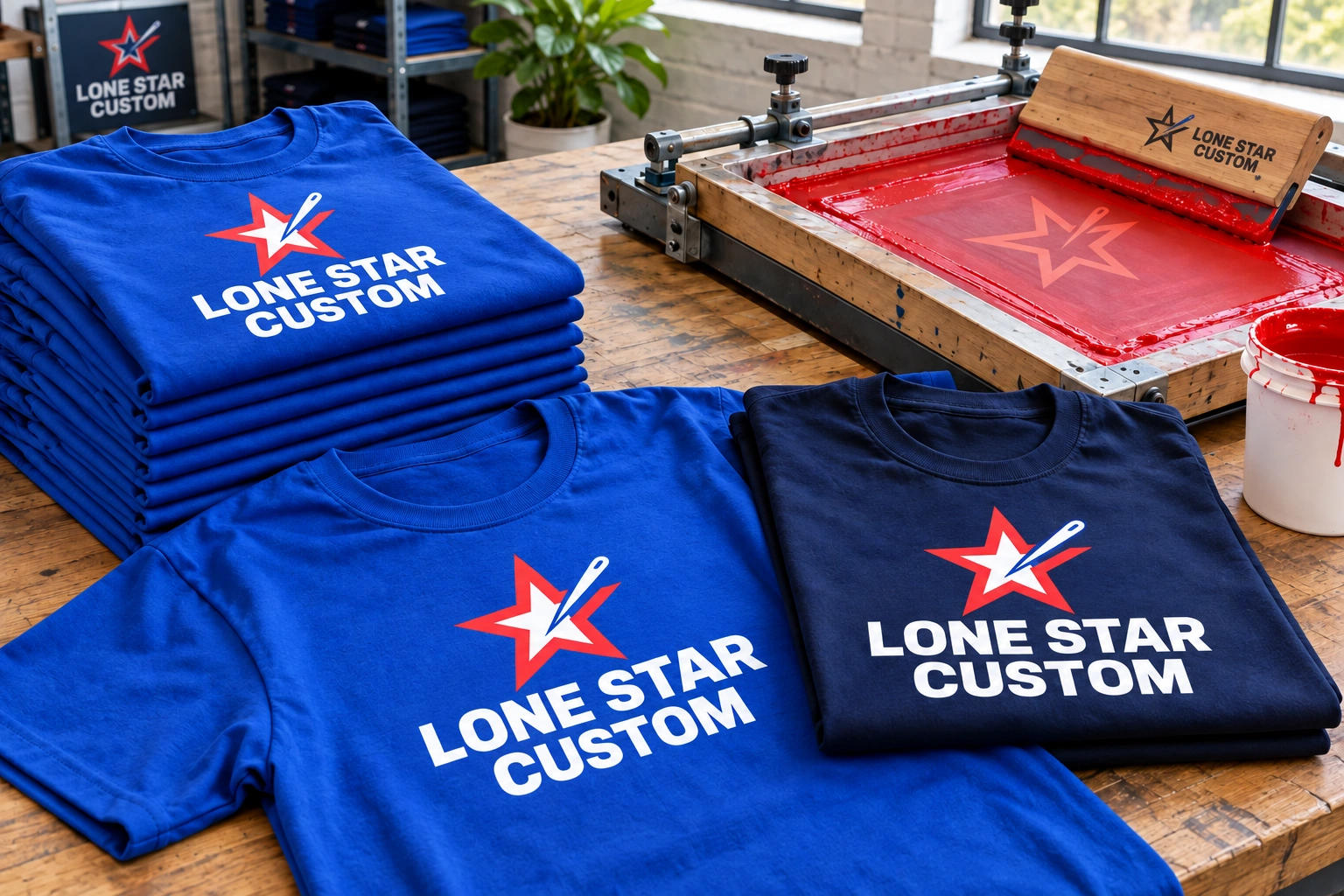
Screen printing transfers ink through a prepared screen onto the garment. Each color and placement affects production setup, so the method becomes especially attractive when the same artwork is repeated across a larger run.
Where screen printing works well
- Company and event T-shirts
- School and spirit wear
- Team fan apparel
- Fundraiser and nonprofit shirts
- Merchandise drops
- Simple front, back or sleeve graphics
What buyers should consider
Screen printing economics depend on garment selection, quantity, number of colors, print locations and artwork complexity. A simple one-color chest print behaves very differently from a multi-location, multi-color job. Your quote should make those variables clear.
Ask whether the artwork needs to be separated by color, how the ink will interact with the fabric, and whether specialty garments require a different approach.
Embroidery
Embroidery converts artwork into a stitch file and uses thread to build the design directly into the garment. It creates a dimensional finish that is common on professional uniforms, polos, headwear and outerwear.
Where embroidery works well
- Polos and button-downs
- Structured hats and caps
- Jackets and outerwear
- Workwear and uniforms
- Bags and selected accessories
- Small chest logos and names
What buyers should consider
Fine lines, very small text, gradients and highly detailed illustrations may need simplification before stitching. Stitch count, design size, garment structure and placement all affect both appearance and cost.
A good embroidery process includes digitizing, a proof or sew-out strategy when appropriate, and consistent placement standards for reorders.
DTF printing
Direct-to-film printing produces the artwork on a transfer film and applies it to the garment with heat and pressure. It is useful when artwork contains many colors, gradients, photographic detail or individualized names and numbers.
Where DTF works well
- Detailed full-color logos
- Short or mixed runs
- Personalized apparel
- Names and numbers
- Artwork with gradients or fine detail
- Garments where traditional screen setup is not efficient
What buyers should consider
DTF has a different hand feel from screen printing because the transfer sits on the fabric surface. Garment fabric, transfer size, placement and laundering expectations should be considered before choosing it for a long-term uniform or merchandise program.
Durability, comfort and garment suitability
Screen-print durability depends on the garment, ink system, curing and care. Large solid DTF designs can feel heavier than smaller or more open artwork. Large embroidered areas can also become heavy; garment construction, fabric stability and stitch density need to suit the placement.
Company uniforms and repeat orders
Structured polos, hats, jackets and workwear often suit embroidery. Tees, sweatshirts and larger graphics often suit screen printing. Seams, fabric and logo detail can change that recommendation. For recurring programs, save the approved garment style, logo file, placement, decoration method and color specifications so future orders follow the same standard.
Explore embroidery · Explore screen printing · Explore uniforms and workwear
How to compare the three methods
1. Start with the garment
A structured hat, lightweight performance shirt and heavyweight cotton tee are different production surfaces. Choose the garment first when possible, then select the decoration method that suits it.
2. Review the artwork
Bold spot-color graphics are often natural candidates for screen printing. Small professional logos often work well in embroidery. Highly detailed multicolor art may favor DTF. Artwork can frequently be adjusted to fit a preferred method.
3. Consider quantity and reorders
The best first-order method is not always the best program method. If an organization expects frequent reorders, department additions or multiple locations, consistency and repeatability may matter as much as the initial unit price.
4. Consider placement
Left chest, full front, full back, sleeve, hat front and bag placements have different physical constraints. A production partner should confirm what is realistic before approval.
5. Confirm the deadline before choosing a method
Turnaround varies with product availability, artwork approval, decoration requirements, order size and the current production schedule. Share the required in-hands date early so the production plan can be built around the actual deadline.
Pricing: what actually changes the quote?
Instead of relying on generic online price ranges, compare quotes using the inputs that materially affect your project:
- Garment brand and style
- Quantity by size
- Decoration method
- Number and size of placements
- Artwork complexity
- Number of screen-print colors
- Embroidery stitch count
- Personalization
- Packaging, kitting or multi-address shipping
- Deadline and product availability
An apples-to-apples comparison is more useful than a headline per-piece price that excludes setup, garment differences or additional placements.
Which method should a business use?
For many businesses, a mixed decoration program is the most practical answer. Staff polos and hats may use embroidery, field or event shirts may use screen printing, and personalized or short-run items may use DTF. The goal is visual consistency across the program even when the production method changes.
Which method should a school or team use?
Schools and teams often need several product types at once: fan shirts, coaching polos, hats, travel gear, jerseys and fundraiser merchandise. Select the process by item instead of forcing every product into one decoration method.
Frequently asked questions
Can multiple decoration methods be used in one order?
Yes. A coordinated program can include screen printing, embroidery and DTF when different garments or placements call for different processes.
Is there one method that is always cheapest?
No. Cost depends on the garment, quantity, artwork, placement and production setup. Comparing the complete project is more useful than comparing decoration methods in isolation.
Can I bring my own garments?
Customer-supplied garments may be possible for some projects after a suitability review. Confirm the exact garments before assuming they can be decorated.
What artwork should I send?
Vector artwork such as AI, EPS, SVG or production-ready PDF is ideal when available. High-resolution raster artwork can also be evaluated. The production team can advise what needs adjustment.
How fast can an order be produced?
Timing depends on product availability, artwork approval, decoration requirements, quantity and the current production schedule. Share the required deadline with the quote request so feasibility can be confirmed.
Get a project-specific recommendation
If you are deciding between screen printing, embroidery and DTF, send LS Custom the garment type, artwork, quantity, placements and required date. The recommendation can then be based on the actual project instead of a generic rule.
Request a custom apparel quote.