
Who orders?
Employees, teams or departments shop the approved store.

Company stores & fulfillment
Company stores and fulfillment for employee teams and multiple locations. Bring approved products, ordering responsibilities and delivery into one clear program.
Discuss My Company Store See How It Works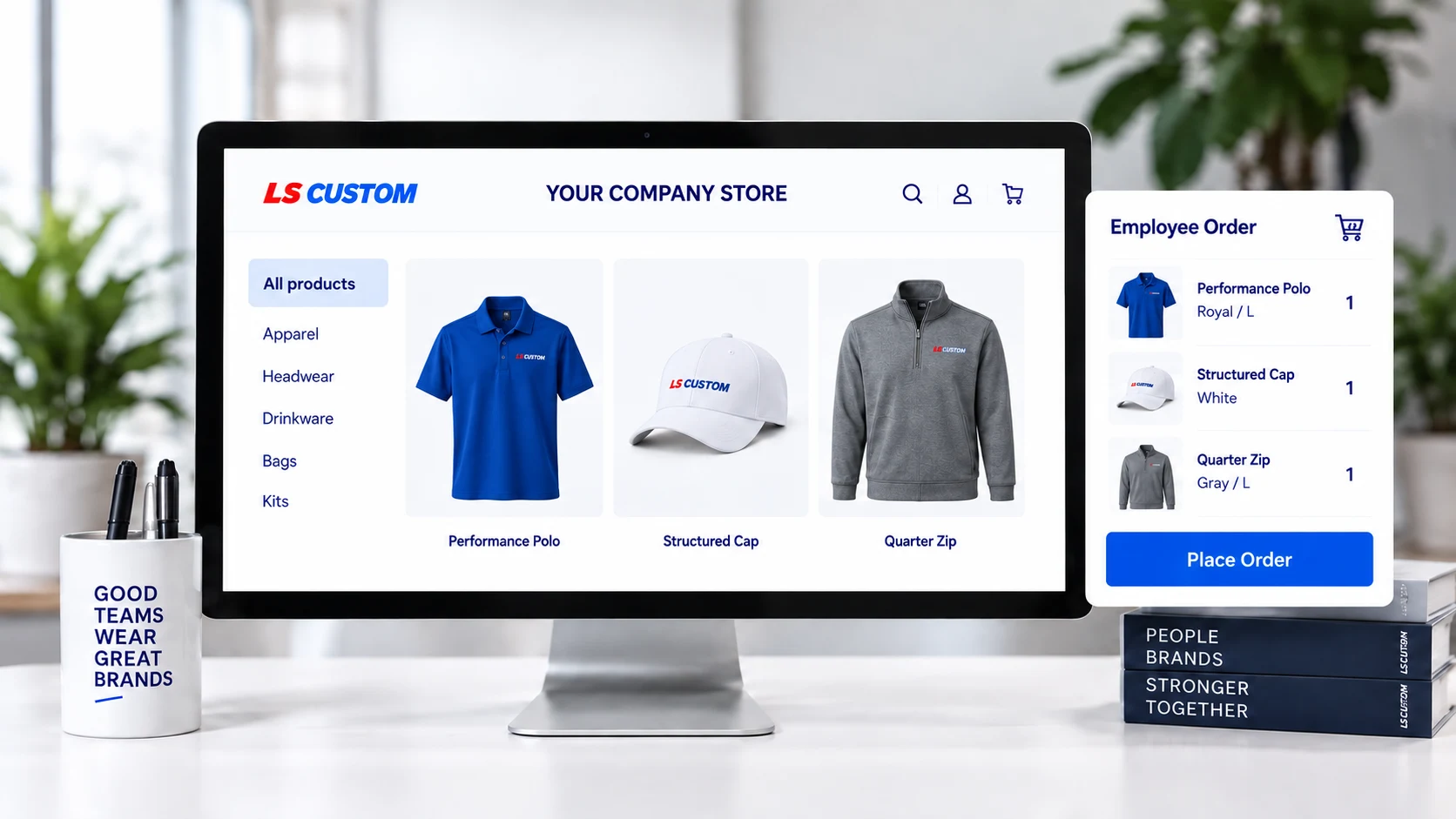
Employees, teams or departments shop the approved store.

You choose the products, colors and decoration.

We pick, pack and ship directly to your people, wherever your quoted program supports.
We handle the details, so your team gets the right gear.

Your team orders from the approved collection.

We pick, quality check and prepare each order.

Orders ship directly to your employees, wherever they are, as scoped.
Choose the right mix for your team’s needs.

Popular items held for your program, with inventory and dispatch terms confirmed in advance.
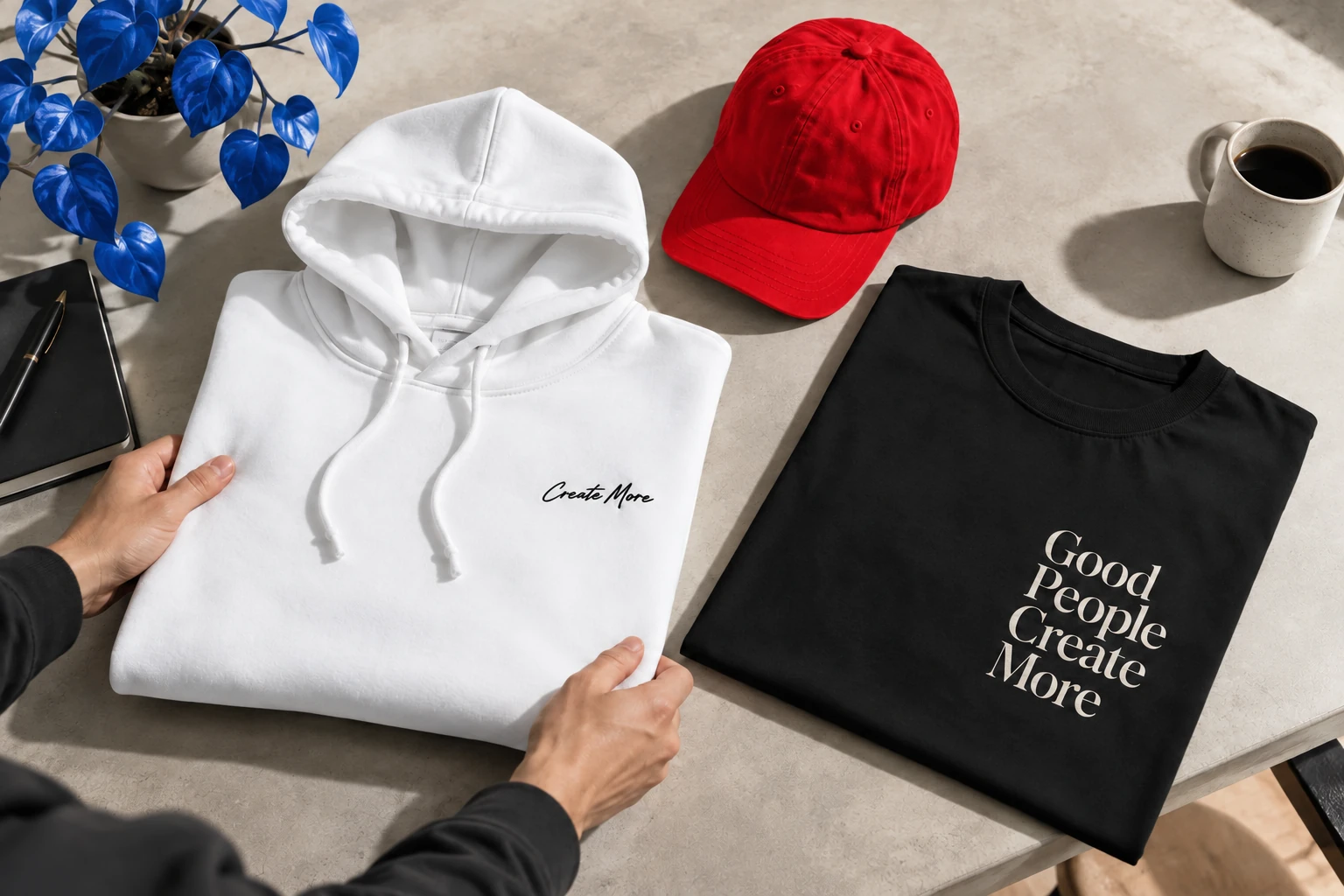
A wider selection when you need more options. Production timing is confirmed with your program.

Keep your program on schedule with seasonal or planned ordering windows.
Same approved products. Same great look. Less time, less work.
Help finding your store
YOUR PREFERENCES, BUILT INTO THE PROGRAM
Plan an approved assortment with organic-cotton and recycled-content options. Set product, size and ordering rules so teams do not have to restart the selection process.
See the ordering logic
An example of how a company ordering program can work. Your products, users, payments and fulfillment rules are defined during setup.
Example ordering flow
Agree garments, colors, logo placements and size options before the collection opens.
Example only. This is not a live store or checkout.
Define your program
The right setup depends on how your people order and how the merchandise is funded and delivered.
01
Who can order? Who pays? Which products belong to each department or location? Define exceptions and approval ownership.
Plan ordering rules02
Agree inventory ownership, storage, stock levels, substitutions and replenishment responsibility.
Discuss inventory03
Separate setup, merchandise, packing, shipping and ongoing services. Confirm delivery destinations and customer support.
Scope my programOther ways to work together
Explore a partner program designed around your business and the people you serve.
Start with one project
Tell us your organization, locations and approximate merchandise needs. We’ll review the right setup and fulfillment approach.
Share your company, approximate quantity and timing. We’ll review fit and prepare the next steps. Project pricing and delivery commitments are confirmed in your quote.
Use the private store link supplied by your organization. If you need help finding it, call 855-896-3724 with your company name. Each organization has its own approved products and ordering rules.
A bulk order works well when one buyer has one deadline. A company store helps when approved products are ordered repeatedly by different people; a hybrid can combine bulk production with individual ordering. Define who pays, who approves exceptions, department or location assortments, inventory commitments, packing requirements, destinations and delivery expectations before launch.
Products, decoration, setup, storage where needed, packing and shipping all affect the quote. Stocked inventory, made-to-order products and order windows have different commitments and lead times. Confirm the scope and costs in writing before opening the store.
Start with the people, locations and administration you want to simplify. We will confirm the supported workflow, product choices, costs and launch plan before opening your store.
Plan approved garments, student or parent payment, optional names, replacement orders and grouped or individual delivery. Agree department reporting and who handles questions.
Plan a school program →Tell us who orders, who pays and where orders go. Discuss corporate-funded items, allowances and individual extras so we can verify the right setup.
Plan a company program →Share team size, locations, purchasing requirements, approval roles and reporting needs. Integrations, inventory commitments and service expectations are scoped to the program.
Discuss enterprise requirements →Your proposal identifies included setup, garment and decoration prices, any ongoing charges, storage, packing and delivery. A larger program can be discussed before an opening merchandise order.
Review pricing guidance →Compare stocked essentials, made-to-order goods and scheduled order windows. Confirm substitutions, size exchanges, personalization rules and replenishment responsibility.
Explore the Merch Hub →Allowance, payment, integration and reporting requirements are reviewed for your program; not every configuration is available by default. Already ordering? Get order help.
TEXAS PURCHASING
Qualified Texas organizations and legitimate resale buyers may be able to document eligible purchases without Texas sales tax. Get the paperwork handled before invoicing.
A store should make approved merchandise easier to order. Product range, ordering permissions and fulfillment are scoped around your organization.
Start with approved products, artwork and a clear ordering contact.
Discuss branch assortments, budget responsibilities, approvals and delivery destinations.
Plan expected order volume, launch phases, support responsibilities and stock or on-demand options before rollout.
Before your store goes live
The storefront is one part of the program. Confirm purchasing, inventory and support responsibilities too.
An employee store organizes approved workplace merchandise. A retail store sells products to customers or fans. A gift-redemption portal lets eligible recipients choose from an approved selection. They need different payment, access, support and fulfillment rules, so choose the buying model before selecting features.
The agreed model may use company purchasing, employee payment or a defined combination. Document which products the employer funds, who pays shipping and how exceptions are approved. Allowances, employee-paid upgrades and payment connections are not assumed to be included in every store.
No. An included setup offer covers only the setup scope confirmed in writing. Products, decoration, freight, packing, storage and ongoing services remain separately priced where applicable. Ask for a proposal that distinguishes opening costs, recurring charges and optional features before committing.
Describe the rules you need: eligible employees, budgets, reset dates, product limits and exception approvers. LS Custom can review a suitable workflow. The proposal should identify which controls are automated, which require manual review, and which need separately priced development or software.
No. Share the named systems, required data, access rules and approval process for technical review. Confirm the connection, security responsibilities, implementation costs and testing plan before relying on it. A working merchandise store does not by itself establish compatibility with your internal systems.
Stocked goods require an inventory commitment and replenishment plan. An ordering window collects demand before the agreed production run. Compare order frequency, minimums, employee deadlines, storage and leftover-stock risk. Different products can use different models when the workflow is clearly scoped.
Review expected daily orders and peak releases, locations, product count, approval rules, receiving needs, support ownership and reporting. Test representative orders before rollout. Headcount alone does not define the workload, and capacity or service commitments should be documented for the actual program.
Resolve these items in the agreement before launch. Identify inventory ownership, account access, permitted data exports, remaining stock, open orders and transfer or shipping charges. Do not assume that ending a fulfillment service automatically transfers a domain, storefront or software subscription.