
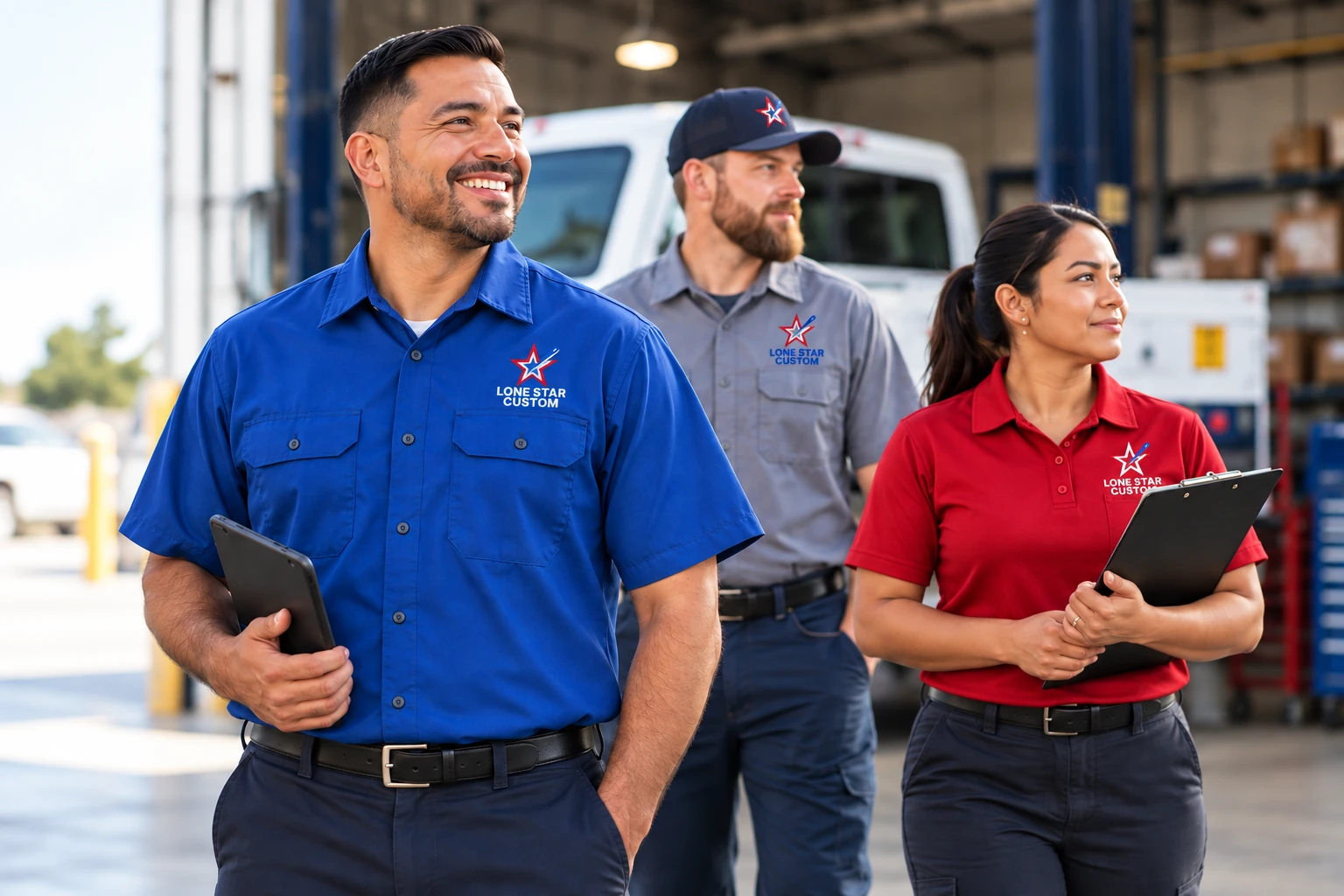
How to Build a Custom Apparel Program That Is Easier to Manage
Custom apparel works best when it is planned as a program rather than treated as a series of disconnected shirt orders. The goal is not simply to put a logo on a garment. A useful program connects the audience, garment, artwork, decoration method, approval process, quantity, required date and future reorder needs.
Quick answer
Start by defining who will wear the apparel and why. Then choose garments around the real use case, confirm artwork and decoration requirements, collect accurate sizing, document approvals and decide how future reorders should work. If multiple departments, locations, events or employee groups will order repeatedly, an organized Merch Hub or managed ordering model may be more useful than restarting each order from zero.
1. Define the objective before choosing the product
An employee uniform program has different requirements from a trade-show giveaway, school spirit-wear drop, customer gift or staff onboarding kit. Before selecting products, identify the primary goal:
- Employee uniforms or staff identification
- Client-facing corporate apparel
- Team or school spirit wear
- Event apparel and promotional merchandise
- Employee onboarding or recognition
- Recurring merchandise for multiple locations or departments
This keeps product selection tied to the actual job the merchandise needs to perform.
2. Choose garments around the environment and wearer
Consider how and where the item will be used. Office teams may prioritize polished polos, jackets or button-downs. Field teams may need workwear and layering options. Fitness teams may value movement and lightweight garments. Event buyers may care more about broad sizing, easy distribution and a clear event date.
Fabric, fit, garment construction, laundering expectations and climate can all affect the recommendation. A supplier should review those details before assuming one blank works for every audience.
3. Match the decoration method to the garment and artwork
Screen printing, embroidery and digital transfer methods each fit different combinations of garment, artwork, placement and quantity. Bold repeated graphics may fit screen printing. Logos on polos, hats or jackets may fit embroidery. Detailed multicolor artwork or flexible quantities may point toward a digital method.
The best choice depends on the specific project. Ask the supplier to explain why a method fits the garment and artwork rather than choosing only from a generic price chart.
4. Build an approval process before production
Artwork approvals reduce avoidable mistakes. Confirm the garment, color, logo version, placement, decoration details, personalization and quantities before production begins. For names, numbers or department-specific apparel, review the roster carefully.
Organizations with strict brand standards should also document approved logo files and placement rules so future orders are easier to reproduce.
5. Collect sizing and quantities deliberately
Quantity affects product availability, production planning and the economics of different decoration methods. Collect sizes before finalizing the order whenever possible. If the program will add employees or participants later, ask how replacement pieces and reorders will be handled.
A quote should identify what is included and make any project-specific minimums or production constraints clear before approval.
6. Share the required date early
Production timing depends on product availability, artwork approval, decoration requirements, quantity, personalization and the current production schedule. Share the required in-hands date at the beginning of the project so feasibility can be confirmed before the order is approved.
A responsible production plan distinguishes between the date a buyer would like the order and the date the supplier can actually confirm.
7. Plan reorders before they become urgent
If the same organization expects new hires, replacement garments, new locations, seasonal programs or recurring events, document the approved products and artwork. Reorders are easier when the original specifications are available, although garment availability and production details still need to be reconfirmed.
For larger recurring programs, a Merch Hub or organized company-store model may create a clearer ordering path for employees, departments or locations.
8. Compare suppliers on process, not slogans
When evaluating a custom apparel partner, ask practical questions:
- How will the supplier recommend products for the intended use?
- How is artwork reviewed before production?
- What information is required to confirm timing?
- How are project-specific minimums communicated?
- Can the supplier support future reorders?
- Can multiple departments or locations be organized separately?
- Are pickup, shipping, kitting or other distribution options available for the program?
These questions reveal more about the buying experience than broad claims about being the fastest or cheapest option.
9. Evaluate the complete quote
A useful quote should make the product, quantity, decoration, placements, personalization and any additional services understandable. Comparing only a headline per-piece number can hide differences in garment quality, included decoration or project scope.
For a better comparison, send competing suppliers the same project information and evaluate the complete plan.
10. Learn from the first order
After distribution, note which sizes were short, which garments people preferred, whether the decoration suited the use case and how often replacements are needed. That information can improve the next order without relying on invented ROI formulas or generic benchmarks.
Frequently asked questions
Is there one best garment for employee apparel?
No. The right product depends on role, environment, climate, laundering, brand presentation and budget.
Should every item use the same decoration method?
No. A coordinated program can use different methods while keeping artwork and brand standards consistent.
How should a company plan for new hires?
Keep approved artwork and product specifications organized, then confirm current garment availability and production details when new pieces are needed.
What should I send when requesting a quote?
Send the intended use, approximate quantity, garment preferences, artwork, decoration locations, required date and any distribution or repeat-order needs.
Plan the program around the real buying process
LS Custom helps businesses, schools, teams and organizations evaluate products, decoration methods, artwork, approvals and repeat-order needs around the specific project. For recurring programs, the team can also discuss whether a Merch Hub or company-store workflow fits the organization.
Request a project-specific quote.
Match the program to your community
Explore HOA and community apparel for residents, volunteers and neighborhood events, or gym, fitness and wellness apparel for staff and member collections.
Continue planning
How to Build an Employee Uniform Program That Is Easy to Reorder · How to Use Earth Tones in Custom Merch