
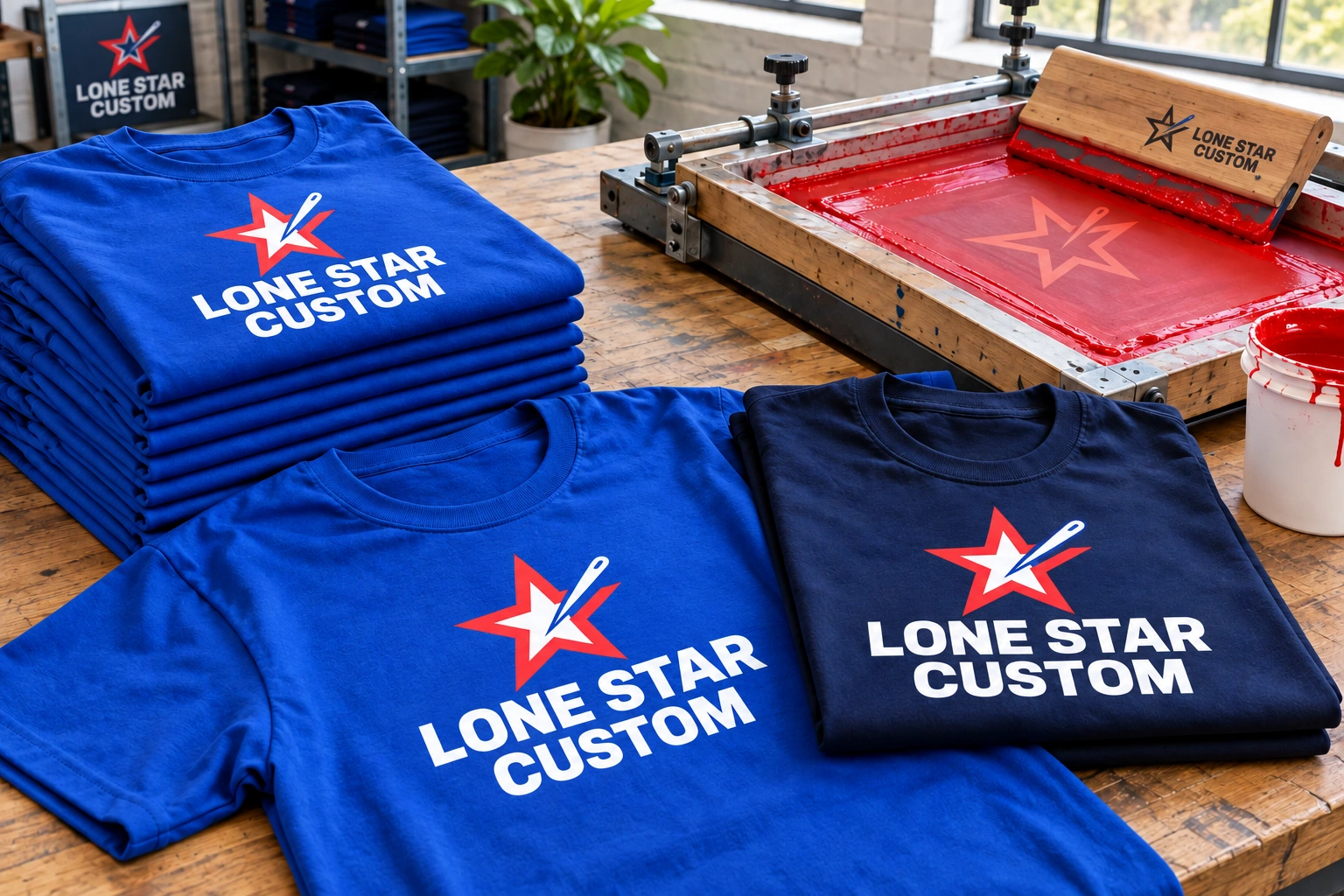
Custom apparel can be produced in several ways, and the decoration method affects how a design looks, feels, wears, and prices out. Screen printing, direct-to-film (DTF) printing, and embroidery each fit different combinations of artwork, garment type, quantity, and use case.
Screen Printing
Often a good fit for: bold graphics, repeat designs, and larger quantity runs.
Screen printing pushes ink through a prepared screen onto the garment. It can produce strong color and a classic printed feel, especially on tees, sweatshirts, and many cotton or blended garments.
Considerations:
- Setup is more involved than some digital methods, so quantity and color count can affect economics.
- Highly photographic or very fine-detail artwork may be better suited to another method depending on the garment and design.
- Final durability depends on garment, ink system, artwork, curing, and care.
DTF Printing
Often a good fit for: detailed artwork, gradients, multicolor graphics, and flexible quantities.
DTF transfers a printed design from film to the garment with heat and adhesive. It can work across many garment types and is useful when artwork complexity makes screen setup less practical.
Considerations:
- The print can have a different hand feel than screen printing.
- Large solid designs may feel heavier than smaller or more open artwork.
- Pricing and the best production method still depend on quantity, garment, artwork, placement, and deadline.
Embroidery
Often a good fit for: polos, hats, jackets, bags, uniforms, and logo-driven branding.
Embroidery uses thread stitched into the item, creating texture and a dimensional finish. It is commonly chosen for professional uniforms and products where a sewn logo is appropriate.
Considerations:
- Very fine detail, tiny text, gradients, and photographic artwork may need to be simplified for stitching.
- Large embroidery areas can become heavy or expensive.
- Garment construction and fabric stability matter when selecting placement and stitch density.
How to Choose
The best method is usually the one that balances artwork, garment, quantity, placement, intended use, budget, and required date. A large tee run with a simple graphic may point toward screen printing. A colorful detailed design may point toward DTF. A uniform polo or hat with a logo may point toward embroidery.
LS Custom can review the artwork and garment choices before production and recommend a decoration approach for the specific project. Minimums, pricing, production timing, and delivery are project-specific and should be confirmed in the quote and proof process.
Continue planning
Choosing Screen Printing, Embroidery or DTF in Texas · Custom Team Uniforms for Houston Sports Programs