
Decoration Quality
Ask to review relevant embroidery and print examples on suitable products.
Explore Embroidery
Houston custom apparel buyer’s guide
The best fit depends on what you’re ordering and how your team works. Compare decoration, product selection, local guidance and the services behind the order.
Discuss Your Project
Ask to review relevant embroidery and print examples on suitable products.
Explore Embroidery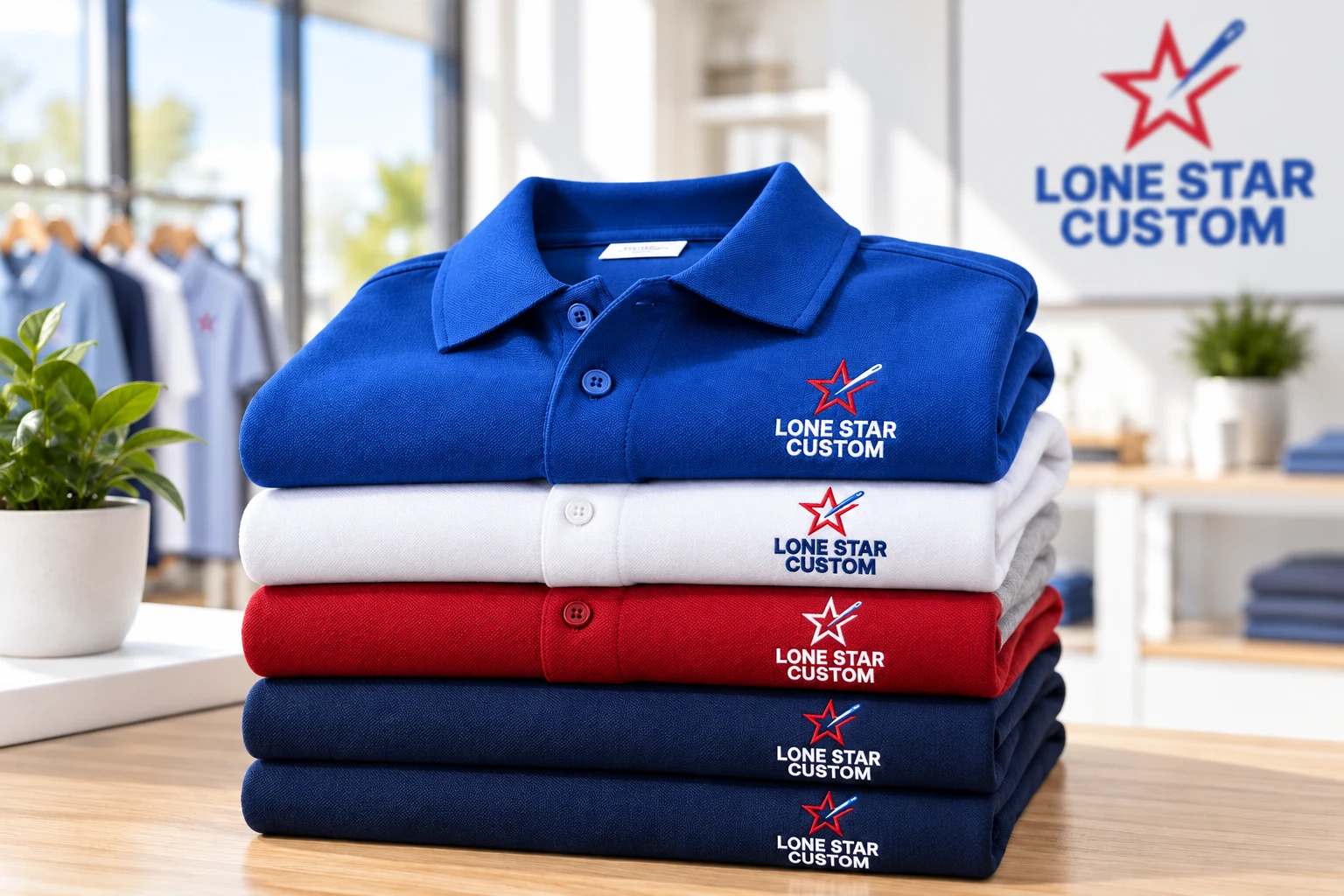
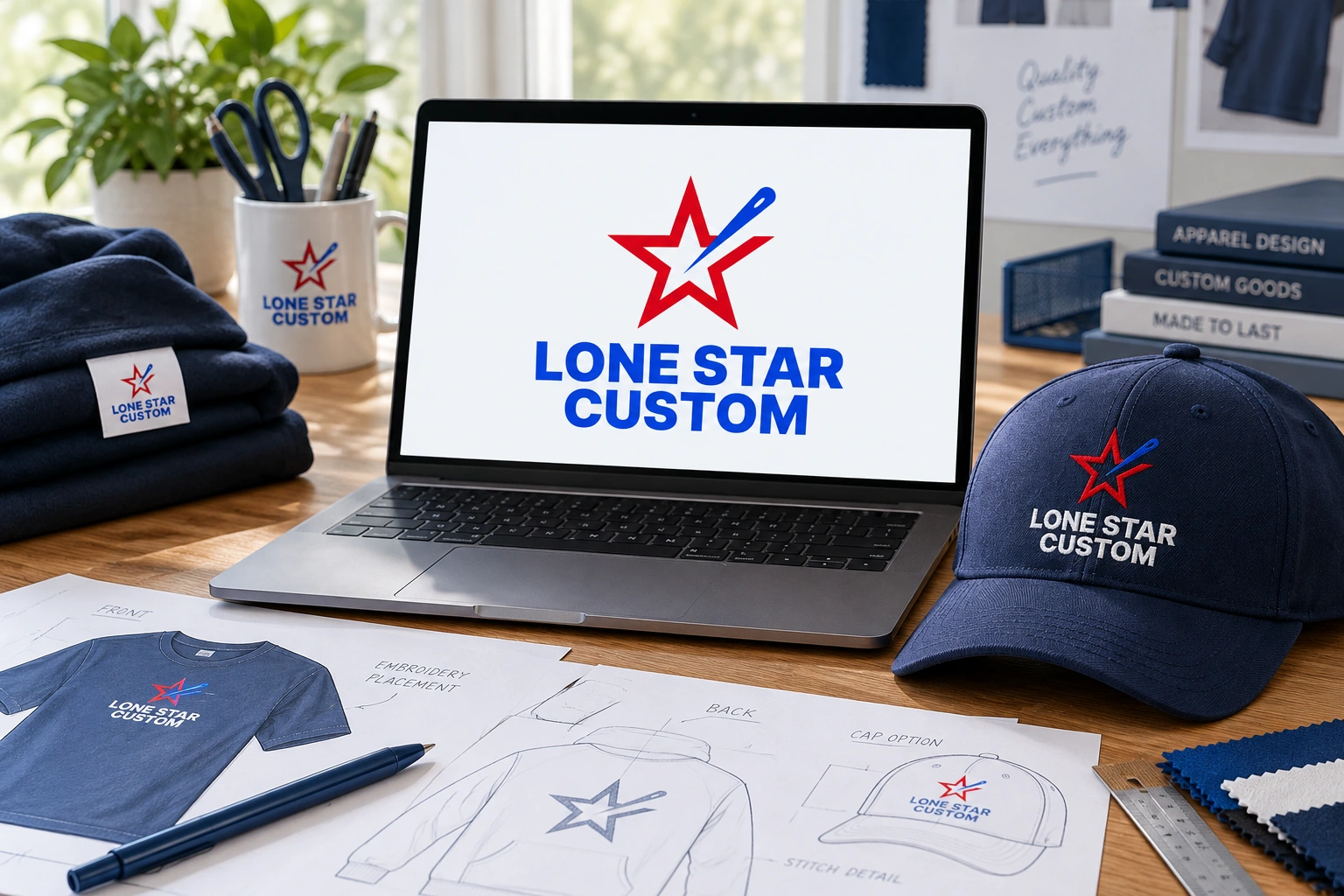
Understand artwork preparation, approval and change handling.
Explore Screen Printing
Compare the same products, quantities and service scope. On a small screen, scroll the table sideways.
| Provider | Published services to explore | A useful question to ask |
|---|---|---|
| LS Custom | Custom apparel, promotional merchandise and managed programs | How would you organize our products, approvals and recurring orders? |
| Bayou City Shirts | Screen printing, embroidery and branded merchandise | Which products and decoration methods suit this project? |
| Pixelbent | Apparel decoration, stores and fulfillment | How would your production and fulfillment services fit our order flow? |
| Sunline Products | Katy-based custom apparel and promotional products | Which garment and decoration options fit our quantities and timing? |
| Houston Uniform | Direct-purchase uniforms, embroidery and company stores | What stock and company-ordering program could support our team? |
Compare stitched examples on similar polos, hats or work shirts. Check small lettering, edges and placement at the actual intended size.
Confirm digitizing, proof approval, placement records and how reorders will be matched. Ask whether existing embroidery files can be reviewed.
Use the same garments, quantities, logo sizes and locations. Include setup, personalization and delivery when comparing totals.
Review examples with similar fabric, artwork and ink coverage. Ask which method is suitable for your quantity and design.
Agree garment styles, colors, sizes, artwork dimensions and print locations. Understand what is being approved before production.
Share the required delivery date and all destinations. Ask how approvals, availability and shipping affect the schedule.
Major buyer guide
Use equivalent scopes, documented capabilities and your own operating requirements. Competitor offerings change; verify current claims directly before awarding a program.
Compare the same scope rather than choosing from marketing language alone: store model, inventory ownership, kitting, fulfillment locations, reporting, integrations, account support, pricing and exit terms. Social Imprints publicly describes company stores and in-house fulfillment; LS Custom's proposal should be evaluated only on the capabilities and terms documented for your program.
First decide whether you need a strategic program, hands-on local support or primarily product ordering. HALO publicly markets company stores, integrations, reporting, fulfillment and broader branded-solutions services. A local partner may offer closer physical support, while a catalog can simplify transactional purchasing. Compare the actual scope you need.
4imprint publishes a structured online ordering process with artwork proofs, dates and charges. A managed program can add recurring assortment governance, stores, inventory, kitting, multi-location distribution and program reporting. Compare equivalent services and total delivered cost rather than assuming either model is universally better.
Staples Promotional Products publicly positions enterprise services around global infrastructure, security, compliance, sustainability transparency and centralized merchandise strategy. Ask which of those capabilities your project actually requires, then require each bidder—including LS Custom—to document the exact scope, systems, locations, controls and pricing it will provide.
An agency-style model becomes more relevant when the work includes campaign strategy, creative development, licensing, retail collections, complex sourcing or audience programs in addition to production. A production-focused vendor can be more appropriate when specifications are already clear and operational execution is the primary need.
A corporate program is usually built around repeatable governance: approved assortments, ordering rules, inventory or on-demand decisions, distribution and ongoing account management. A one-off purchase can be simpler when the need is a single event or defined order. Compare the operating model, not just the product list.
Break the proposal into comparable workstreams: print, packaging, merchandise, creative, freight, fulfillment, technology and account management. Identify which services are performed directly, which are sourced through partners, what each costs and who owns errors or delays at each handoff.
Retail and fan programs can require collection strategy, licensing approvals, product development, merchandising, inventory risk and consumer fulfillment beyond ordinary corporate purchasing. Use an agency model as a reference for the capabilities to evaluate; verify the exact current offering directly with each provider.
Ask where inventory physically sits, who employs the warehouse team, who owns the warehouse system, how orders enter the workflow, who packs them, how inventory is reconciled, who handles returns and what happens when an order fails. Outsourcing is not automatically bad; undisclosed responsibility gaps are the risk.
Normalize every quote into the same categories: product, decoration, setup, creative, storage, receiving, pick-and-pack, packaging, postage or freight, technology, account management and exception fees. Then compare the total expected program cost at realistic volume.
Measure product quality, delivered cost, proof accuracy, communication, inventory accuracy where applicable, on-time performance, issue resolution, reporting, program governance and the supplier's ability to document required capabilities. Weight the criteria according to your program's actual risk.
Ask for the contract scope, system demonstration, sample report, process documentation, facility information or other evidence appropriate to the claim. Marketing pages are useful for discovery but should not substitute for the commitments and evidence attached to your specific program.
Keep specialists when a category has unique technical, geographic, licensing or service requirements that a consolidated provider cannot meet efficiently. Consolidation is more useful when duplicated approvals, fragmented inventory, inconsistent branding and multiple invoices create more cost or risk than specialization saves.
Ask about a comparable program's launch, communication, accuracy, peak-volume performance, issue recovery, billing, inventory or store management and what the reference would change if starting again. Confirm that the reference's scope resembles yours.
Map the work you need across sourcing, decoration, creative, stores, inventory, kitting, shipping and ongoing management. Each provider type can be strong at different parts of that chain. The right comparison is which responsibilities are included, documented and economically sensible for your program.
A corporate store typically controls approved merchandise for employees or internal buyers. A retail store sells merchandise to consumers. A gift-redemption portal lets recipients select or claim an approved gift, often within a budget or campaign window. The technology, tax, inventory and support requirements differ.
Ask how the metric is defined, the measured period, which orders are included, the data source and what exclusions apply. For critical service levels, put the definition, reporting method and remedy into the written agreement instead of relying on an undated marketing statistic.
Choose representative products, locations and workflows; define success measures before launch; include at least one realistic exception; and review quality, communication, packing, tracking, reporting and issue resolution afterward. A pilot should test the operating model, not be designed to guarantee a preferred outcome.
Document artwork and file transfer, inventory ownership, remaining purchase commitments, store data, open orders, product substitutions, receiving, employee communication, reporting history, transition dates and responsibility for stranded stock.
Create your own requirements matrix, verify current public facts, request equivalent proposals, review samples and references and run a pilot when the program is material. Treat best-of pages as discovery aids—not evidence that one supplier is the right choice for your organization.