Technician work shirts
Durable woven options and approved names.

HVAC Technician Uniforms & Apparel
Technician work shirts, service polos and new-hire kits—with a repeatable uniform program for your HVAC business.
Katy · Cypress · West Houston · Nationwide shipping
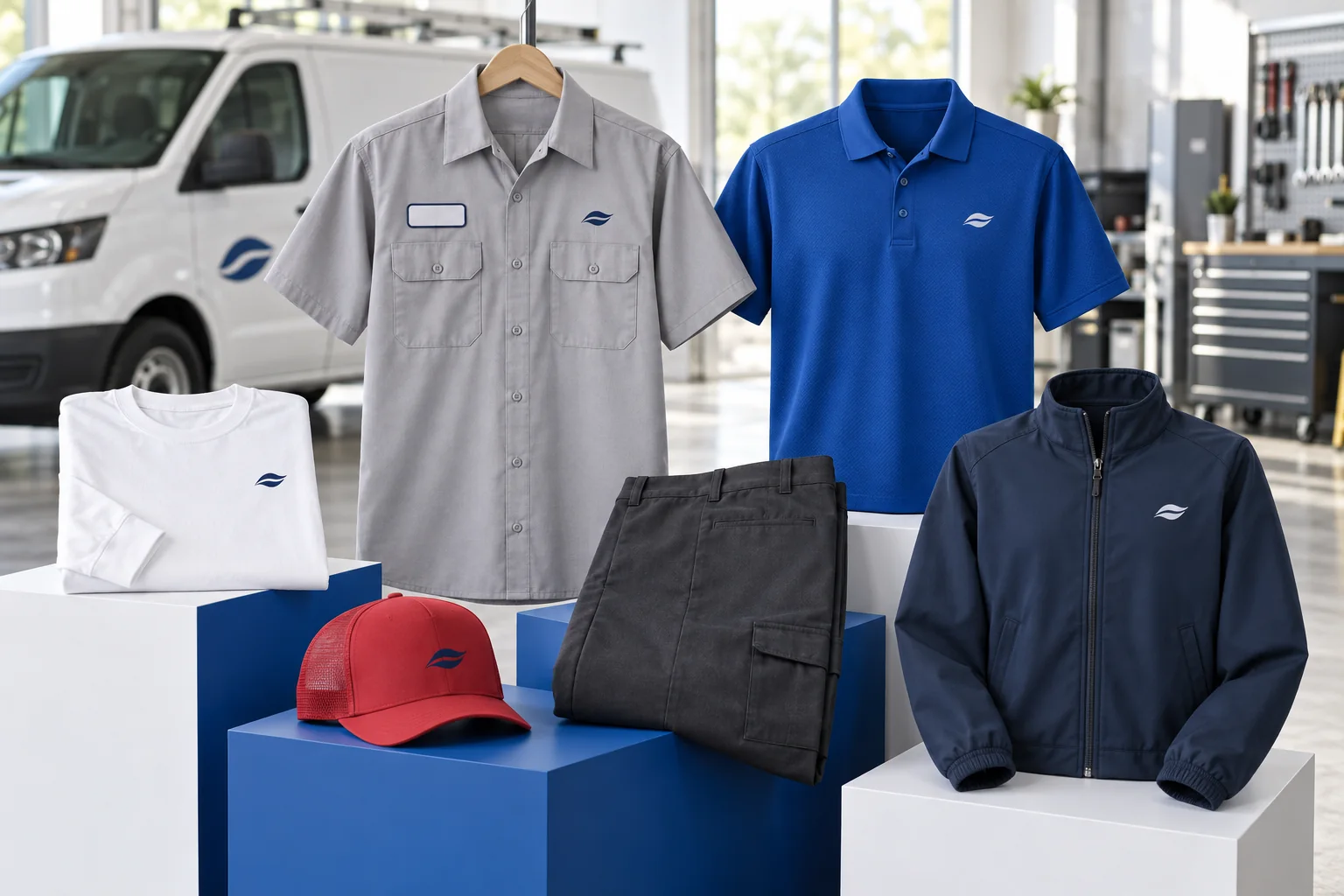
Build your collection
Choose what fits your program. We’ll confirm styles, decoration and availability in your quote.
Durable woven options and approved names.
A clean customer-facing option where work permits.
Practical fabric and sleeve choices.
Plan for movement, washing and job requirements.
Coordinate useful field and company gear.
Defined issue sets for service and install roles.
A useful starting point
These are starting ideas, not fixed packages. Pick one and adjust the products, quantities and delivery needs.
Choose a collection to add it to your brief.
A clear path to your order
Set quantities for service, install and office roles.
Confirm samples, wash care and protection requirements.
Check spelling, placements and colors.
Keep approved styles and an ordering contact together.
Make planning easier
Estimate one product at a time. Add reserve units for new members, new hires or size changes.
This is a quantity estimate, not a price quote. Size breakdowns, styles and production minimums are confirmed separately.
Ask about a company or organization store for your approved merchandise. Standard portal setup is included with a qualifying $2,000+ opening merchandise order.
Products, shipping and additional services are separate. We confirm eligibility, store scope and fulfillment terms in your quote.
Discuss your ordering program →Answers before you order
10 questions
Compare woven work shirts for durability and pockets, polos for suitable customer-facing roles and tees for appropriate installation work. Fit, fabric and care should match the actual job.
Yes. Embroidery, printed designs, names and patches can be scoped. Approve the spelling and placement on the chosen garment.
We can compare lighter-weight and moisture-management garments. Job requirements come first: a performance fabric is not automatically suitable for electrical, flame or other hazards.
Provide the exact required rating before selection. We check available garment documentation and decoration requirements. Ordinary technician shirts are not represented as protective clothing.
A scoped company store can show approved items. We agree who may order, payment or approval needs, minimums, timing and fulfillment before launch.
A shared collection standardizes colors and decoration with approved branch differences. We check stock and agree on substitute rules for later orders.
Ask about samples or a size run for selected styles. Availability, fees and return conditions are confirmed first. Use the exact size chart when collecting sizes.
Start with the shirts, pants, layers and accessories each person receives. Garments, quantities, names, decoration, packing and delivery determine the quote.
The garment or product, order quantity, decoration, personalization, packing and delivery all affect your quote. Tell us your budget and deadline so we can compare suitable options. Minimums and timing are confirmed for your specific order.
Yes. LS Custom serves Katy, Cypress and West Houston and ships nationwide. Include your delivery ZIP codes, number of locations and required arrival date so we can plan shipping and any split deliveries.
No matching questions. Add your question to the quote request and we’ll help.
Start your project
Tell us who the gear is for, what you need and when. Your selections travel with you to the quote request.
Prefer to talk?
855-896-3724
Planning a growing service team
Practical answers for service managers, purchasing teams and multi-branch HVAC companies.
Use a manager-owned roster with an employee identifier, branch, role, selected style, size and quantity. Give technicians the size chart for that exact garment. A supervisor can collect choices in person and submit one checked list; a portal login is not required for a bulk order.
Start with headcount by role and the number of pieces each person receives. Add a separately identified reserve for expected hires or replacements. For example, 30 technicians receiving five shirts need 150 shirts before reserves; this is a quantity example, not a production minimum or price quote.
Compare keeping approved unpersonalized stock, scheduling smaller replenishment orders, or using another agreed ordering process. Decide who authorizes the release and when names are added. Confirm minimums and timing before relying on a next-day new-hire shipment.
Build a transition list showing each branch, current logo, approved replacement artwork, garment styles and changeover date. Identify which existing items may remain in use and which must be replaced. LS Custom can quote a phased rollout instead of assuming every branch must change on the same day.
Have representative team members review movement, fit, pocket access, logo placement and comfort during normal work. Follow the garment care label and record observations after washing. Your safety lead should separately approve suitability for the work; a comfortable sample is not evidence of protective performance.
Separate year-round essentials from seasonal additions. Forecast replacement shirts, expected new hires and weather layers by role, then quote those groups separately. Keep optional gifts or event apparel outside the required-uniform budget so purchasing can see what is driving the spend.
Keeping reserves unpersonalized can make them easier to assign to future hires, but later name decoration adds a production step. Compare that flexibility with your start-date requirements. Agree when personalization occurs and who signs off on spelling before setting the stocking plan.
Use consistent branch codes, order references, product quantities and purchasing contacts. Separate new-hire issues from replacements and optional merchandise. Tell LS Custom which invoice references or reports your team needs; custom reporting and software connections must be confirmed in the account scope.